
London BRTA Study
BRTA’s overview of rail reopenings, capacity enhancements and new stations in the capital.
We have long convened forums in and around the London-wide area. Our focus here is within the cordons of the M25 but also radial rails and calls for an equivalent orbital M25 rail alternative.
Our aim is to bring rail-based solutions to cutting traffic, congestion, emissions and blight, lessen ill-health, improve environmental and well-being conditions to live, work and breathe in the London area.
Regenerating local economic growth
Reconnecting communities, enhancing accessibility and inclusion
Reducing road congestion and pollution, improving our environment
promoting quality of life and health
Heathrow Southern Railway
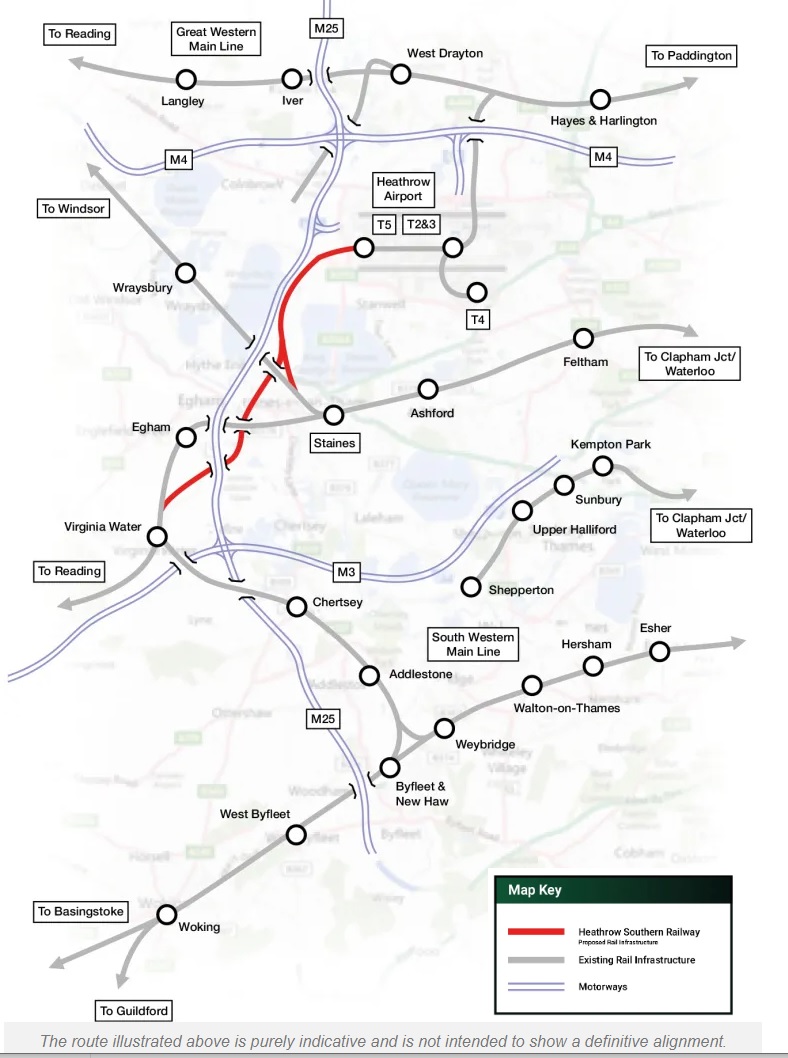
We support the Heathrow Rail initiative to enhance service from London and Heathrow into Surrey and Hampshire. The proposed new railway will make direct services possible between London Waterloo, Clapham Junction and Heathrow via Staines without hindrance.
Our view is that the scheme should also be extended to Old Oak Common and a tunnel to join with the Chiltern main line. Fun fact: there is an empty railway station under Heathrow Terminal 5 that was built but never fitted out. An opportunity? We also see this forming a Reading – Heathrow link (via Guildford and Woking) with direct Brighton services too.
Stated aims of Heathrow Rail:
- Fast, frequent direct trains from Surrey and Hampshire to Heathrow.
- Direct trains to Heathrow from stations in the Boroughs of Spelthorne, Hounslow, Richmond, Wandsworth and Lambeth including Waterloo and Clapham Junction for connections to South London, Sussex, and Kent.
- Direct trains from Surrey and Hampshire to Paddington, creating an alternative London terminal to Waterloo for commuters with excellent connections to the West End, the City, and Docklands via the Elizabeth Line.
- Direct trains from Surrey and Hampshire to Old Oak Common, providing a direct connection to HS2. There are also plans for 23,500 new homes and 65,000 new jobs around the new HS2 station.
- Elizabeth Line trains serving Staines-upon-Thames, providing a frequent service to Heathrow and destinations east of the Airport including the West End, the City and Docklands.
- Crowding relief to the South Western mainline and the London Underground network at Waterloo.
Possible direct access to Heathrow from Southampton, Portsmouth, Bournemouth, Reading, Bracknell, and Wokingham.
West London Orbital
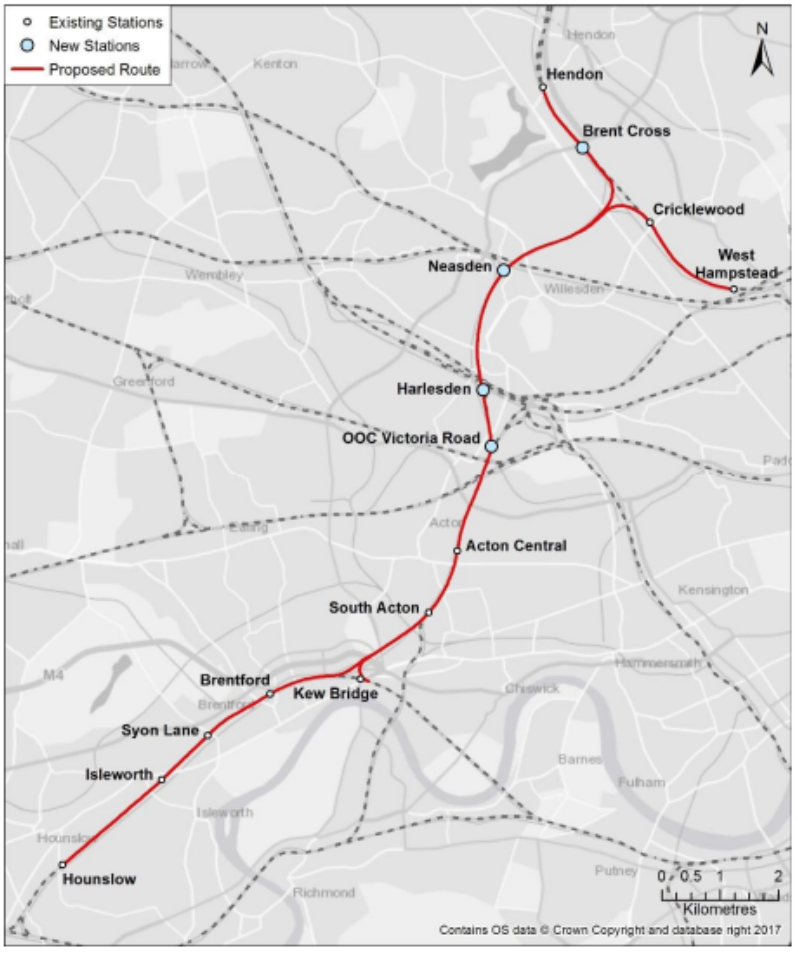
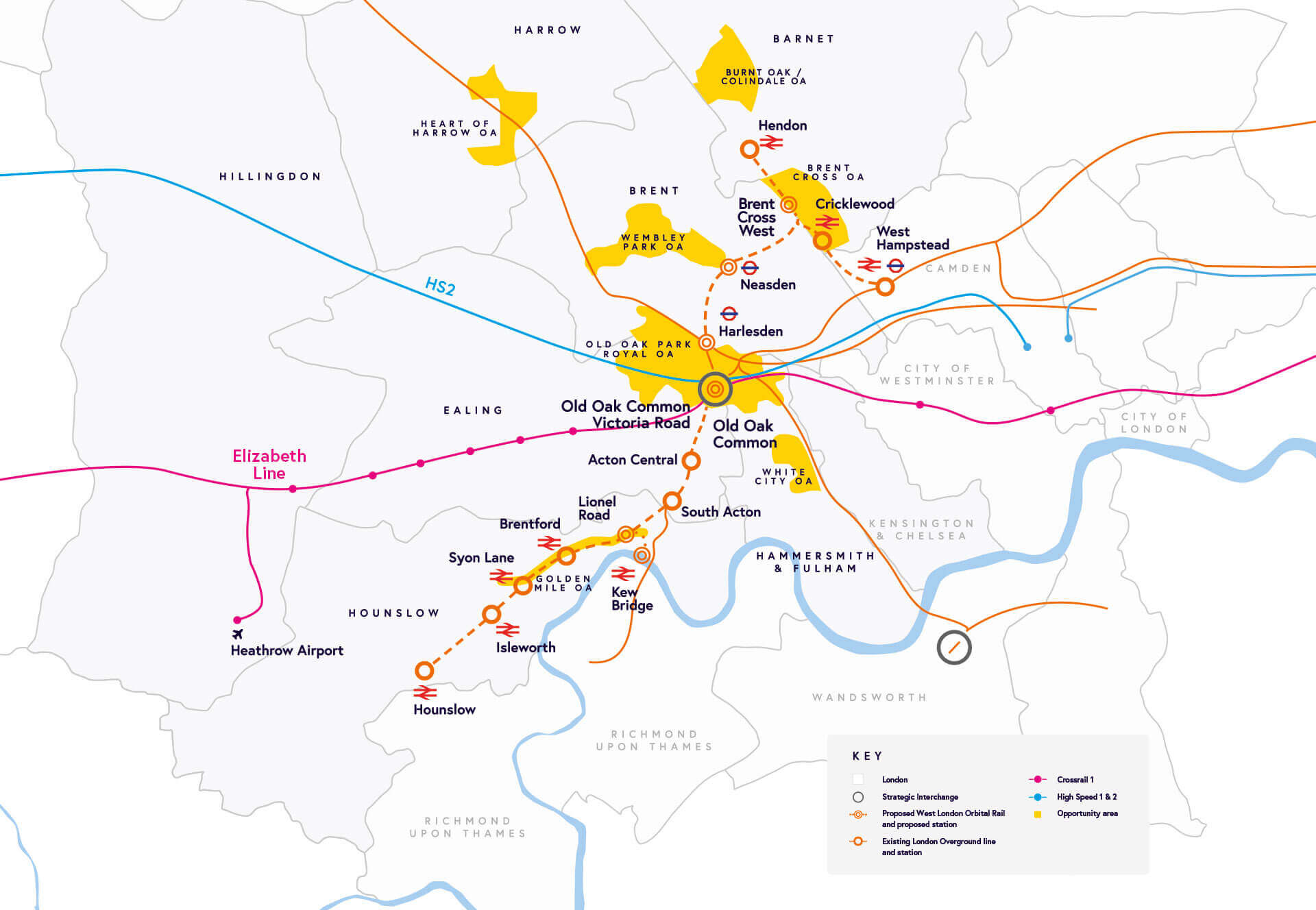
An excellent proposed extension to the London Overground railway system, which would make use of a combination of existing freight and passenger lines including the Dudding Hill line, North London line and Hounslow Loop line.
The route would run for approximately 11 miles (17 km) from Hendon at the northern end to Hounslow at the western end via Brent Cross West, Neasden, Harlesden, Old Oak Common, South Acton and Brentford.
If the extension were opened, it would improve rail connectivity across West and North-West London and establish a number of new connections to existing radial rail infrastructure including Thameslink, the Jubilee line, the Bakerloo line, High Speed 2, and the Elizabeth line. It makes use of existing underused rail infrastructure rather than requiring significant lengths of new track or tunnels to be built.
The scheme is supported by the Mayor of London and Transport for London’s Transport Strategy. It is still at the proposal stage, and TfL is due to launch a public consultation on the scheme in the summer of 2026.
The proposal would involve building four new stations:
- Neasden, providing interchange with Neasden tube station
- Harlesden, providing interchange with the existing Harlesden station on the Watford DC line
- Old Oak Common Lane, providing interchange with High Speed 2 and the Elizabeth line at the planned Old Oak Common railway station, and with North Acton tube station
- Lionel Road, providing interchange with Kew Bridge railway station
The scheme also includes installing additional platforms at Hendon and Brent Cross West stations.
Feasibility
In March 2017 the West London Alliance group of local authorities commissioned a study to assess the feasibility of the line and found:
- The route is technically feasible.
- The scheme represents a high value for money.
- Passenger demand may be able to sustain a regular four-trains-per-hour or more service along the line. Eight trains per hour in each direction would be achievable given existing traffic along the length of the route.
- The line would enable significant new development to be undertaken along its length, supporting the creation of new homes and jobs.
- It would drastically improve orbital travel times around West London compared with the equivalent journey by car.
- It would connect town centres and regeneration areas, putting a greater number of jobs and homes within easy reach of one another and supporting intensification in growth areas.
- It would remove a significant number of cars from the road, reducing congestion and improving journey times, particularly along the North Circular Road.
- It would allow passengers in outer London to access new services on the Elizabeth line and HS2 via an interchange at Old Oak Common Lane.
- It would help to reduce passenger demand for central London stations such as King’s Cross and Paddington.
In March 2026, TfL announced a £6.65 million funding deal between TfL, the boroughs of Barnet, Brent, Ealing and Hounslow, and the Old Oak & Park Royal Development Corporation to progress the scheme further, with a full public consultation expected to be launched in summer 2026.

Lower Thames River Crossing
Seriously? More roads?
BRTA believes that the crossing should be a rail-based solution, not road.
The road option has been quoted as potentially costing £13 billion, chiefly government funded. It would bring more traffic, pollution and delays to existing roads in Essex and Kent.
A rail-based tunnel could bring freight from the Channel Tunnel to the wider East Anglia Rail Network, North London Lines and radial lines relieving the West London Lines for capacity for more freight by rail.
It would also enable routing of East Anglia passenger trains direct from Canterbury, Thanet and the Channel Tunnel.

Docklands Light Railway Extensions
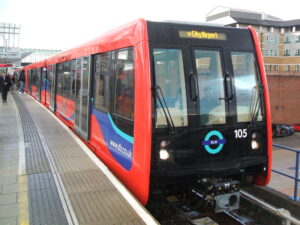
The Docklands Rail Network has grown over the years and has proved a popular, versatile and resounding success.
We believe it should be allowed to grow organically, ideally using road-space accommodation. We like to think big and future-proof.
BRTA makes dramatic calls for the DLR to take over lanes of the North Circular arcing to serve Brent Cross Shopping Centre and a new railway interchange. Another branch could serve Alexandra Palace. A phase 2 around the South Circular would serve Crystal Palace High Level and form a link to Wimbledon.
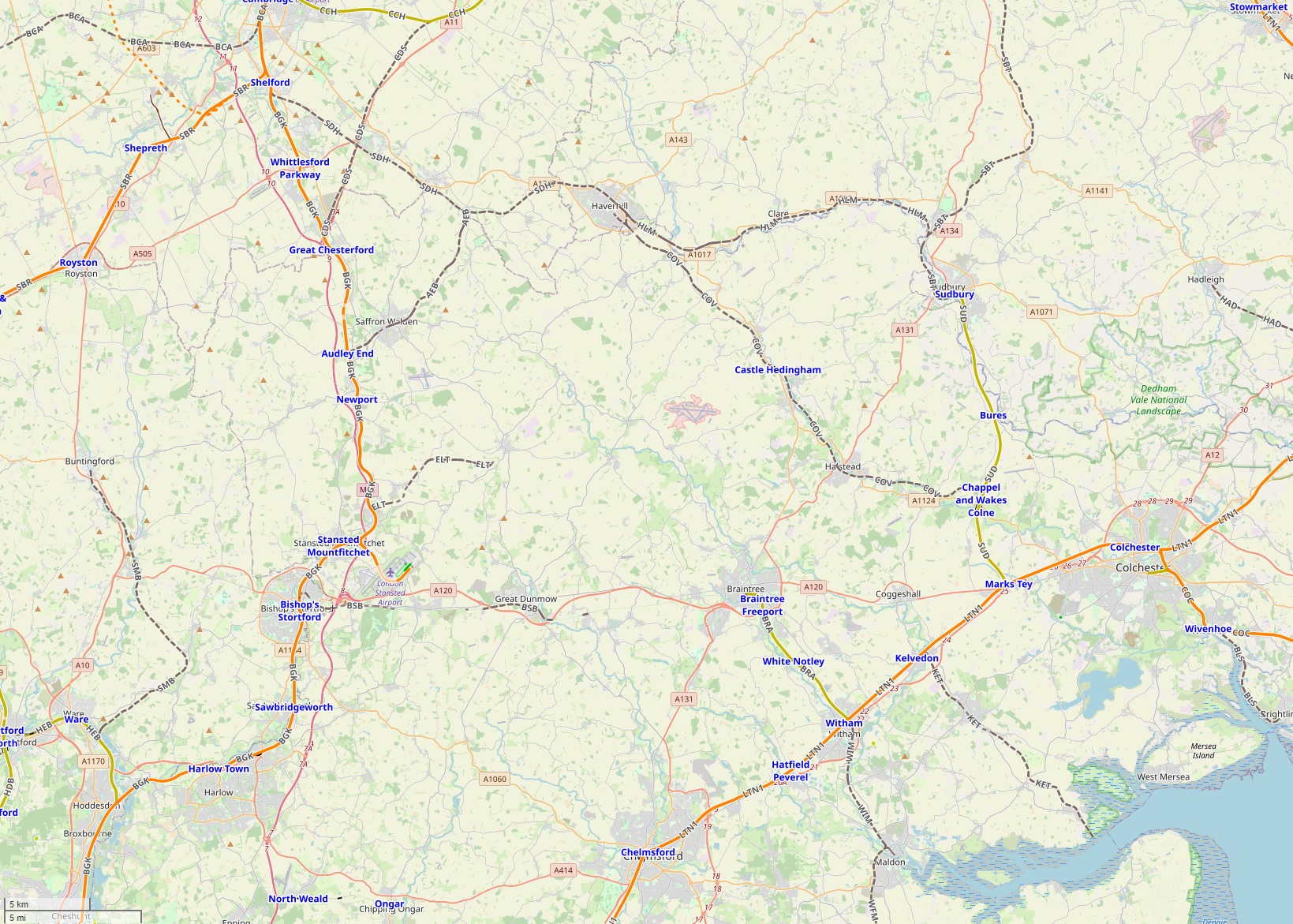
London Stansted Airport – Braintree
The proposal to extend the railway line eastwards along the A120 corridor from Stansted to Braintree has been suggested several times over the last two decades. This would include a new Parkway Station for Great Dunmow.
The benefits would be huge, de-cluttering the A120 in a context of massive infill development. The road is accident-prone and hazardous and needs the relief a proper modern rail link can offer.
The scheme will also re-unite east and west Essex offering train travel for journeys such as Cambridge to Chelmsford, Harlow to Colchester.
Croxley Link
Currently paused – this was an active project until 2016.
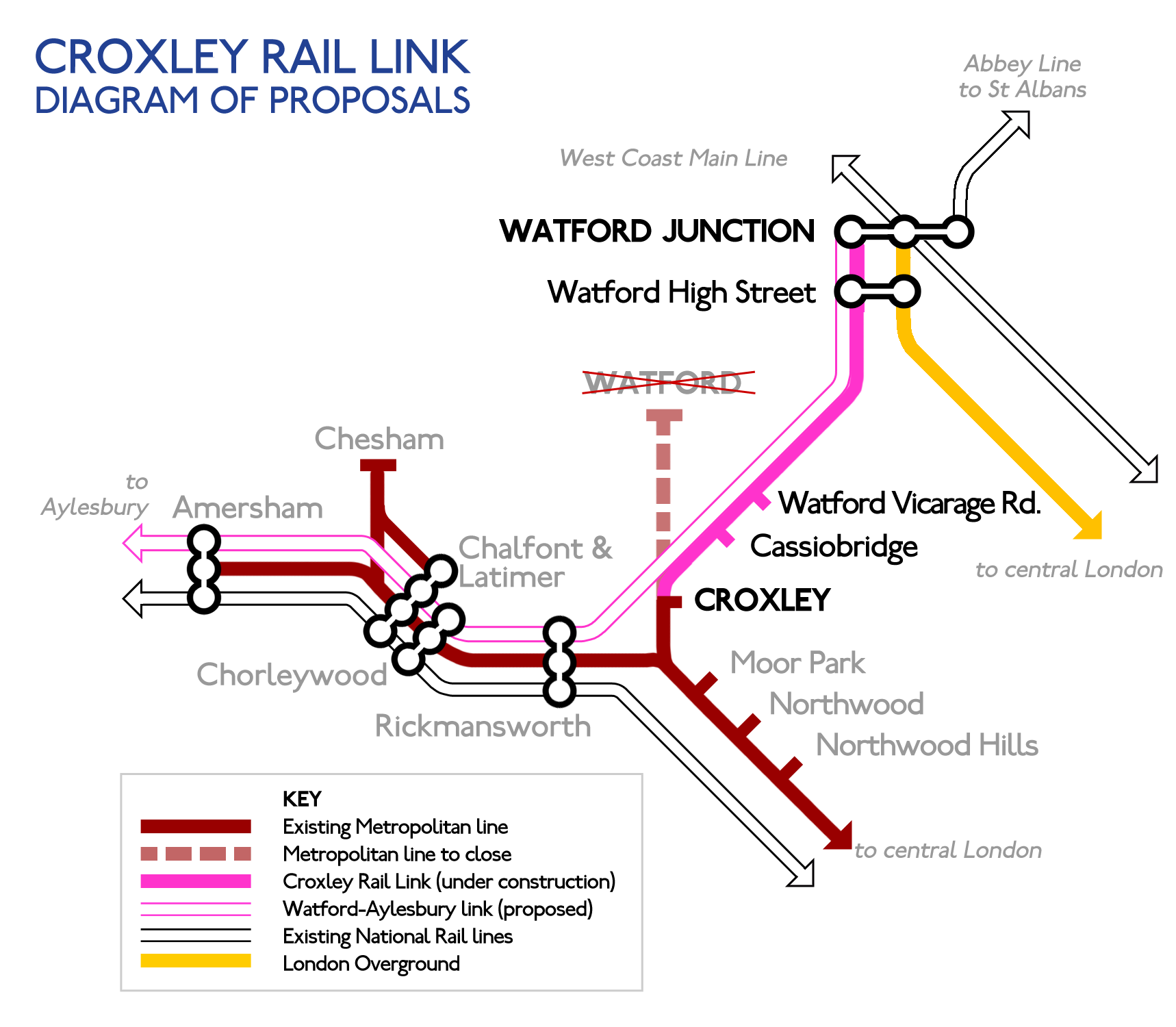
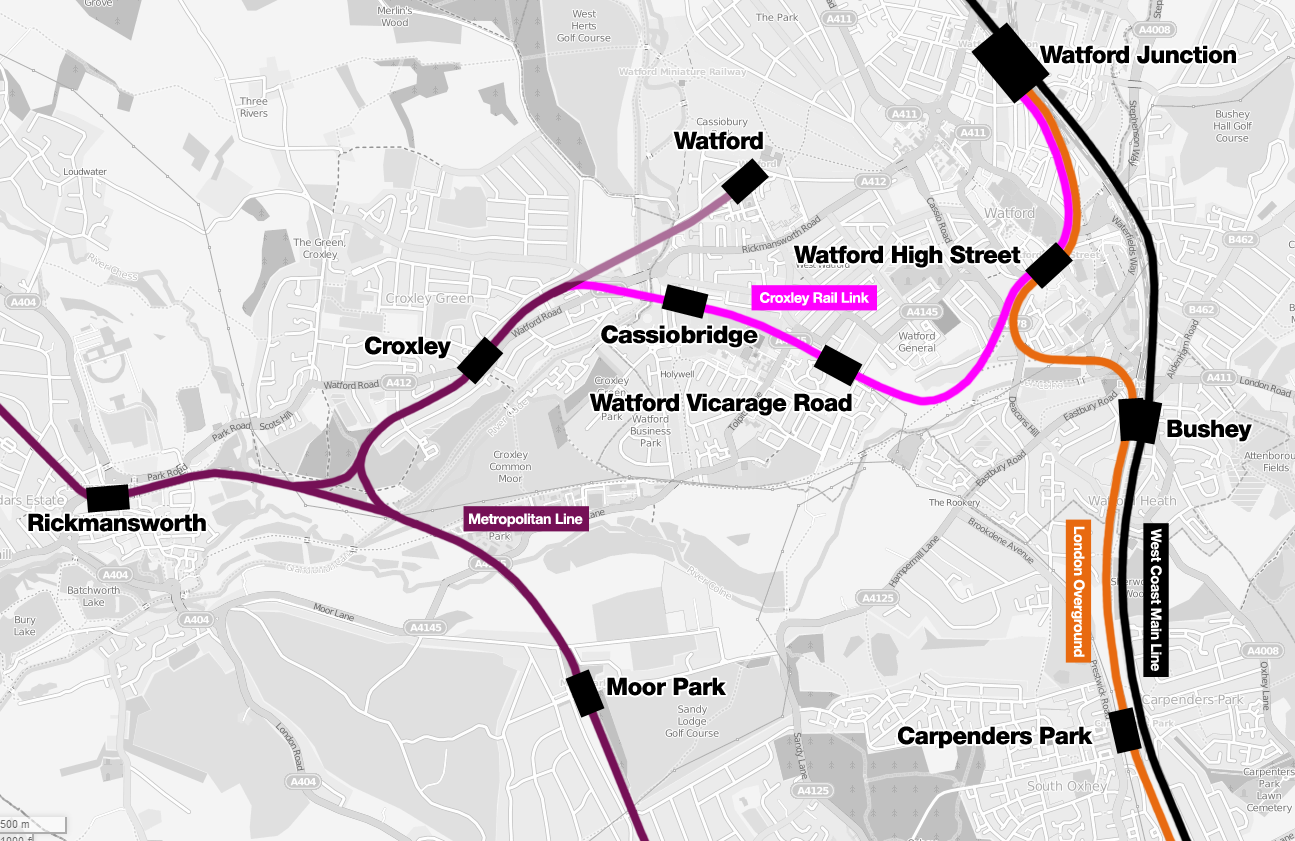
The Croxley Rail Link scheme connects the London Overground and the London Underground’s Metropolitan line at Watford Junction. If the link were to go ahead, the Metropolitan line’s terminus at Watford Underground station would be closed and the line diverted and extended from Croxley to Watford Junction via a reopened section of closed line. The works would have consisted of the realignment of the disused Watford and Rickmansworth Railway’s line between Croxley Green and Watford High Street, with the construction of a viaduct over the Grand Union Canal, River Gade and A412 road and two new stations before branching into the London Overground line near Watford High Street and continuing to Watford Junction.
None of the former BR stations that closed in 1996 would reopen in the plan. Two new stations are to be built: Croxley Green station replaced by Cassiobridge and a second station, Watford Vicarage Road, would have replaced Watford West and the football specials halt, Watford Stadium. The proposed route of the line passes close to Watford General Hospital, where a major business, retail and residential development has been planned.
BRTA says Watford West need not close, it could be used for additional services and capacity, emergencies and also as a small art-deco 1930’s museum dedicated to Metroland.
We’re campaigning for the re-railing scheme to be restarted.
Chessington South – Epsom / Leatherhead
Sustainable rides to the rides! Plus easier car-free commutes.
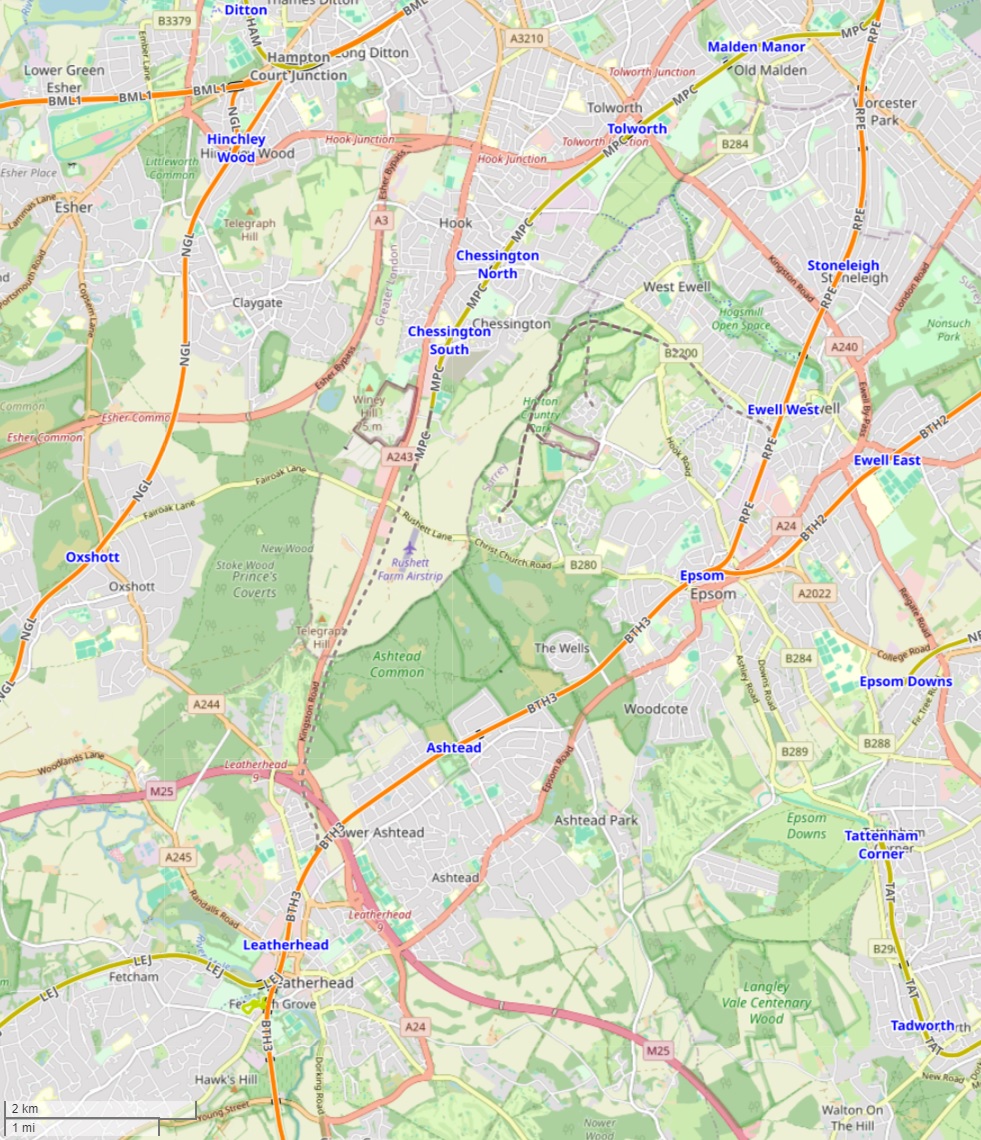
Every year many people visit Chessington World of Adventures, only a short distance from Chessington South station. However, the roads are clogged which affects the local quality of life. The busy centre needs an accessible halt.
A short rail extension would not be too costly – the trackbed is already there having been abandoned in the 40s.
Meanwhile there have also been housing developments in Epsom and Leatherhead and since public transport facilities are almost non-existent, rail-users need to travel by car to both Epsom and Leatherhead with related parking space needs. Extending on to Leatherhead would enable low-carbon choices.
This has also been suggested by Campaign for Better Transport.
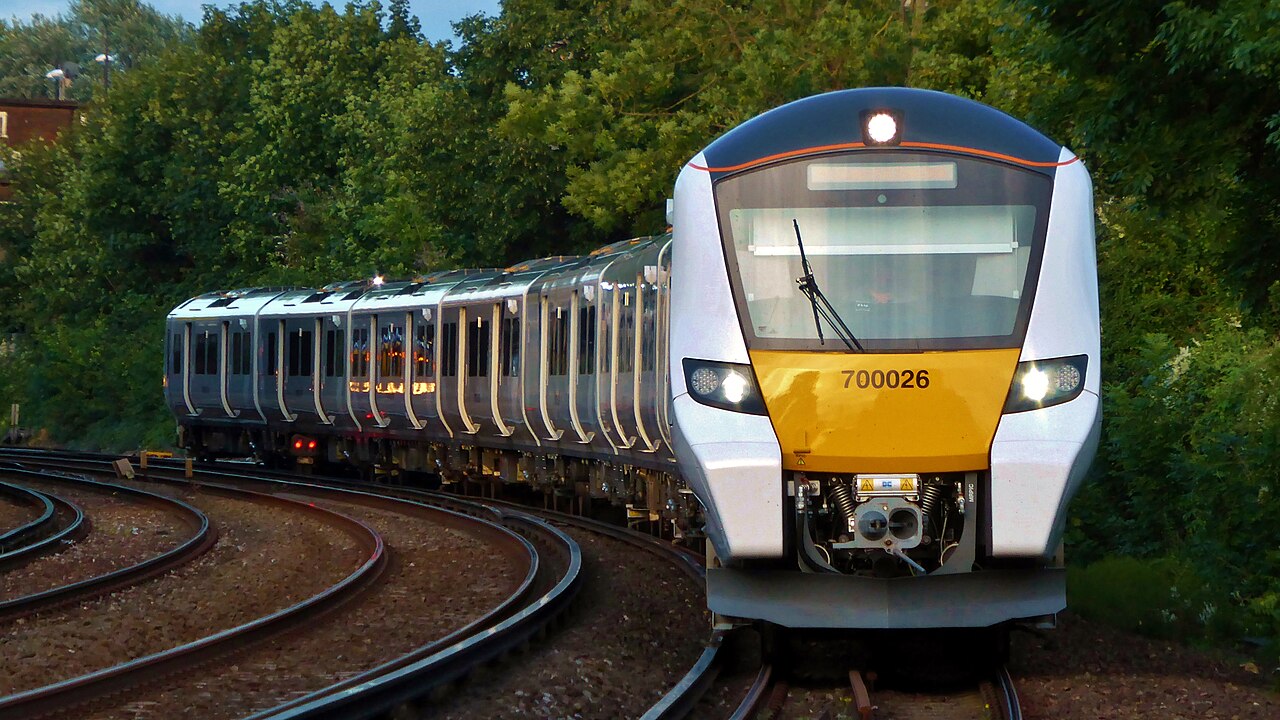
London Orbital Railways
The big picture. A new passenger and freight route outside of the M25 is desperately needed.
We envisage West London bypass via Old Oak Common to Aylesbury/Great Central Corridor to Leicester – Nuneaton Lines.
A new rail link from Bricket Wood in Hertfordshire would join the Midland Main Line. A new station south of St Albans and north of the M25, called Napsbury should be implemented for Thameslink.
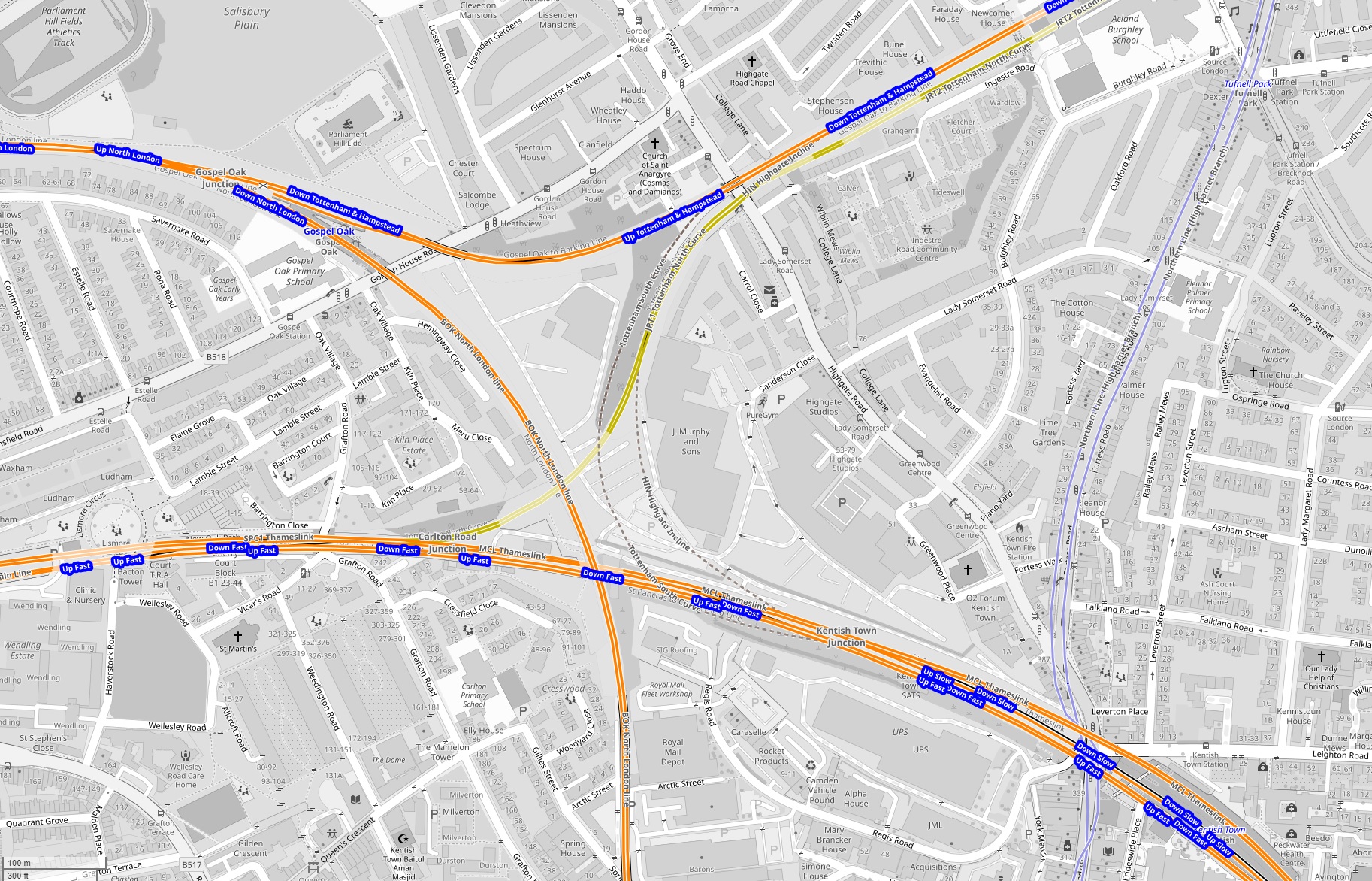
Kentish Town to Gospel Oak Lines
Fairly simple reinstatement of the curve at Kentish Town would enable Thameslink to North-East London integrations as well as Gospel Oak Lines to West Hampstead and future Dudding Hill Lines towards Reading/Heathrow. Investigation is needed.
Moorgate to Edgware & Alexandra Palace via Highgate
Our vision for this missing, yet crucial, London link:
- New stations at Stroud Green, Crouch End, Cranley Gardens, Alexandra Palace and Mill Hill (The Hale).
- A vital alternative line on the Transport for London (TFL) network in the event of unplanned service disruption between Moorgate to Edgware and Alexandra Palace.
- Regular, reliable, comfortable and accessible passenger services with step free access to the proposed new stations.
- Connectivity with the East Coast Main Line at Finsbury Park and the Midland Main Line (MML) at Mill Hill Broadway.
- Re-opening the railways would support proposed major residential/retail developments at Edgware and High Barnet.
- Give direct access to the important entertainment venue at Alexandra Palace.
THE POTENTIAL
To provide an alternative route for Crossrail 2, currently proposed between Tottenham Court Road to Alexandra Palace via Seven Sisters, and instead could open between Tottenham Court Road to Alexandra Palace via Finsbury Park using the old track-bed through Highgate.
Alternatively, to restore the routes between Moorgate to Alexandra Palace via Highgate with an interchange with the TFL Northern line services at Highgate for forward travel to High Barnet and Edgware via Mill Hill (The Hale). And…
- To provide easier access to the entertainment venue at Alexandra Palace
- Sustainable community growth – helping support the proposal of large scale residential developments and retail outlets at Edgware and High Barnet Northern line stations.
- To provide an out-of-station contactless journey interchange between Stroud Green and Crouch Hill station on the Suffragette line.
- To make connections with future London Overground services between Moorgate to Stevenage and Welwyn Garden City.
- To take pressure off passengers having to enter central London to change routes for other destinations in a congested environment.
- To provide an alternative London Underground service on the Northern line between Camden Town and Edgware.
Finsbury Park to Alexandra Palace
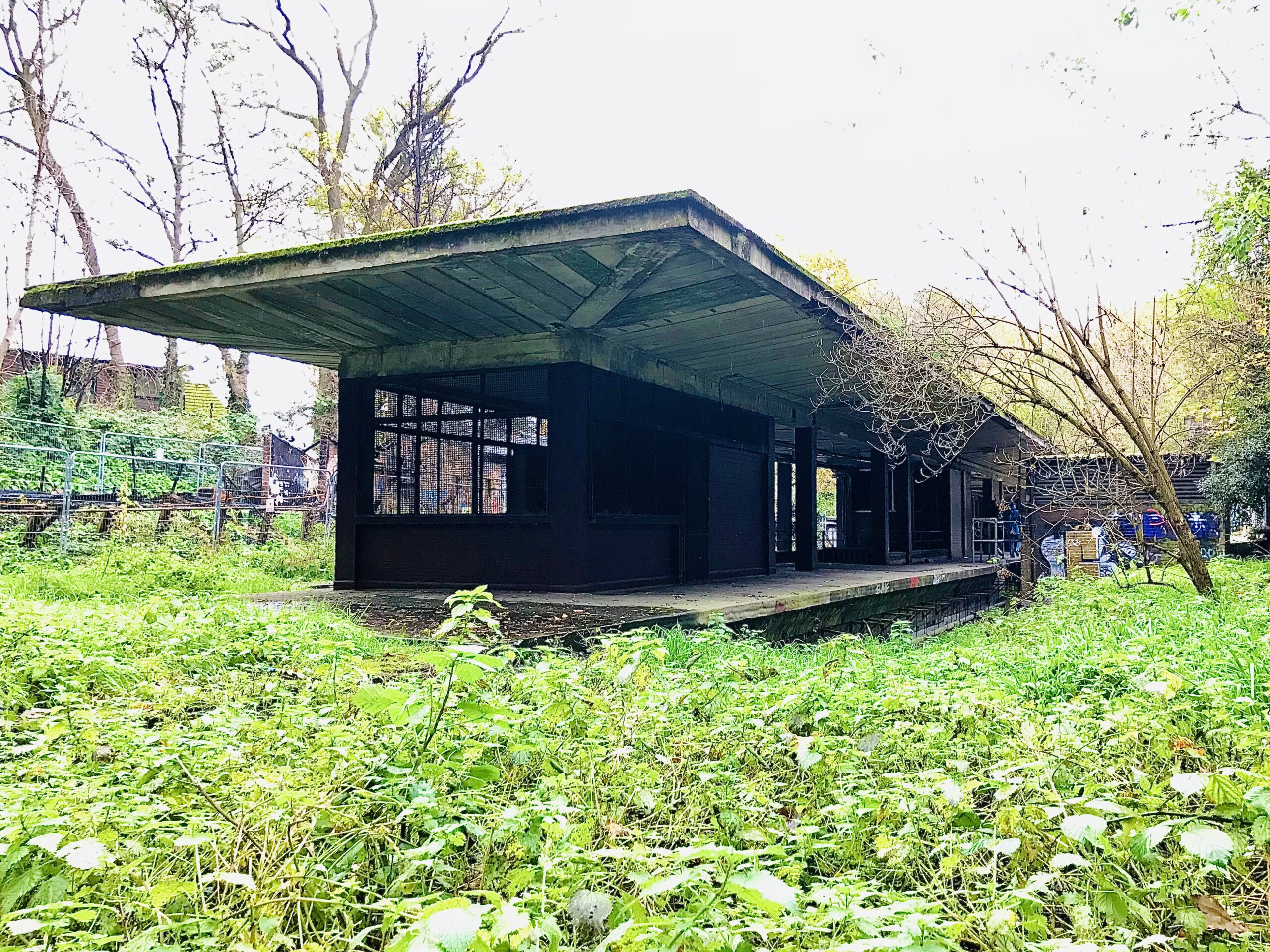
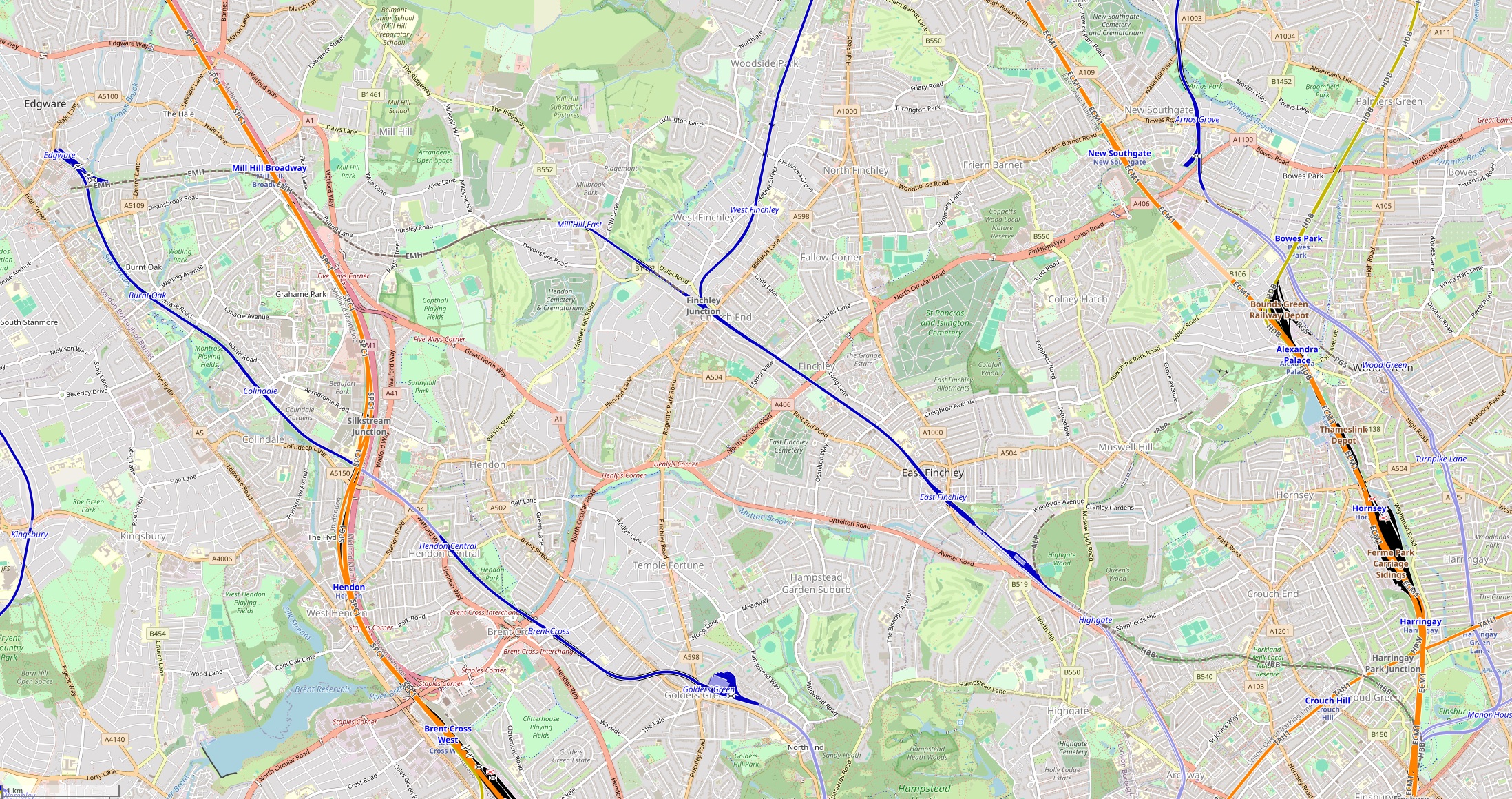
The route would commence and follow the existing National Rail network between Moorgate to Finsbury Park and then follow the old track-bed up a steep gradient, passing through Stroud Green and Crouch End before reaching Highgate Northern line tube station. At this point the line will have to pass through Highgate East and West Tunnel in order to reach the station. After this the line will connect to the existing Northern line and divert at the former site of Park Junction (today just south of Highgate Depot). The route will continue to follow the former track-bed, passing over St James viaduct and through Muswell Hill, before reaching Alexandra Palace. At the former site of Cranley Gardens and Muswell Hill station developments that have encroached onto the track-bed will need to be demolished or redesigned to allow track to pass under such structures.
And to Edgware…
From Park Junction the route will follow the existing Northern line route passing through East Finchley, Finchley Central, over Dollis Brook Viaduct to Mill Hill East. After, following the former track-bed up until Page Street, where a tunnel will need to be constructed as the original alignment has been outlined across residences up to Bunn Lane. After this the transport corridor passes under the A1 (Watford Way), swiftly passing under the M11 and reaching Mill Hill (The Hale) station where an interchange with Mill Hill Broadway can be established. Traveling along the former track-bed, passing under the A5109 (Dean’s Lane), the line will then reach and terminate at the existing Edgware tube station.
COMMISSIONING A NEW FEASIBILITY STUDY
We Identify these Next Steps:
- Ongoing route protection by local authorities.
- Gain combined support of stakeholders: Local Authorities, TFl, DFT, Train Operating Companies, Network Rail, Barnet Council, Haringey Council.
- Inclusion in Regional Transport Strategies / Local Transport Plans.
- More detailed engineering study to refine capital cost estimates.
- Initial environmental assessments.
Assess timetable options. - Demand forecasting and cost-benefit assessments.
- Consideration of likely operating costs.
- Preparation of the business case
- Consider Funding Options: Capital and Operating.
HOW TO ADD YOUR VOICE
Write in support of reopening to your local councillors and MP:
members.parliament.uk/members/commons
or www.writetothem.com
It’s powerful to write to your MP or councillor in your own words, telling your representative about your own beliefs and experiences and how they relate to this area. See below.
Join BRTA as a member to support these and other reopening campaigns
Volunteer with BRTA if you share our vision and want to help bring it about.
Could you help push this campaign forward?
Donate to BRTA to help us advocate for a rail link fit for the 21st century!

Think about the following questions when composing your letter to MPs / councillors:
- What journeys do you make? Work? Leisure? Appointments / visits?
How could this link improve the journeys you make? - Do you actively choose road over rail or bus? Why?
- Do you consider where you live to be well served by public transport?
- Do you have experience of new areas of housing and public transport?
- What are your experiences of the road journeys you make in the region?
- Have you made employment, school or relocation decisions based on journey times or access to public transport? Or on the lack of access to public transport?
- What are your thoughts on the environmental impact of your journeys?
- Do you have accessibility needs that affect journey decisions you make?
- What do you think about air pollution in your area?
- What are the most important transport related issues to you? Why? Journey times? Road congestion reduction? Pollution reduction? Accessibility? Taking freight off the roads in your area? A better connected region?
- What should be done next to make this happen?
Our tips: - Even if your MP is not in this region, your letter provides them with an opportunity to learn about the issue and take action themselves.
- Aim for your letter to be no longer than one and a half sides of A4.
- Engage. Get your representative’s attention with a dramatic fact or short statement.
- State the problem. Present the causes of the problem you just introduced. How widespread or serious is the problem?
- Inform them about the solutions that reopening would bring.
- Call to Action. Let them know what you want them to do about it.
- Ask for a response.