
Stevenage – Luton Airport – Luton – Dunstable – MKC
An ambitious plan, taking a step into a more positive future for all.
Richard Pill explores possibilities of new-build rail for a new context. Moving beyond mere reinstatement of rail to Dunstable, the creation of an entirely new east-west arc would serve many thousands with sustainable options.
rail Network capacity and resilience
Regenerating local economic growth
Reconnecting communities, enhancing accessibility and inclusion
Reducing road congestion and pollution, improving our environment
promoting quality of life and health
The Vision
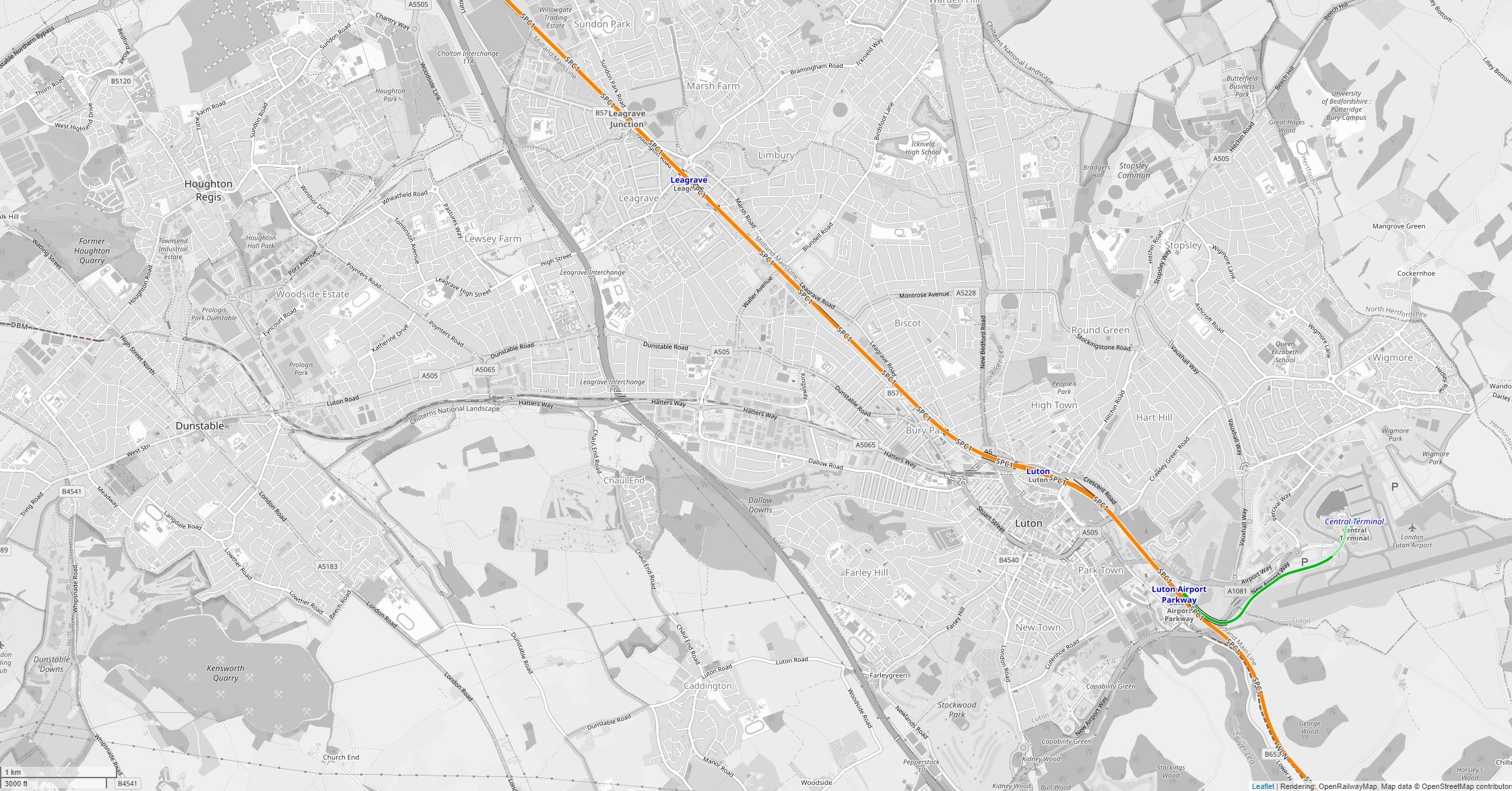
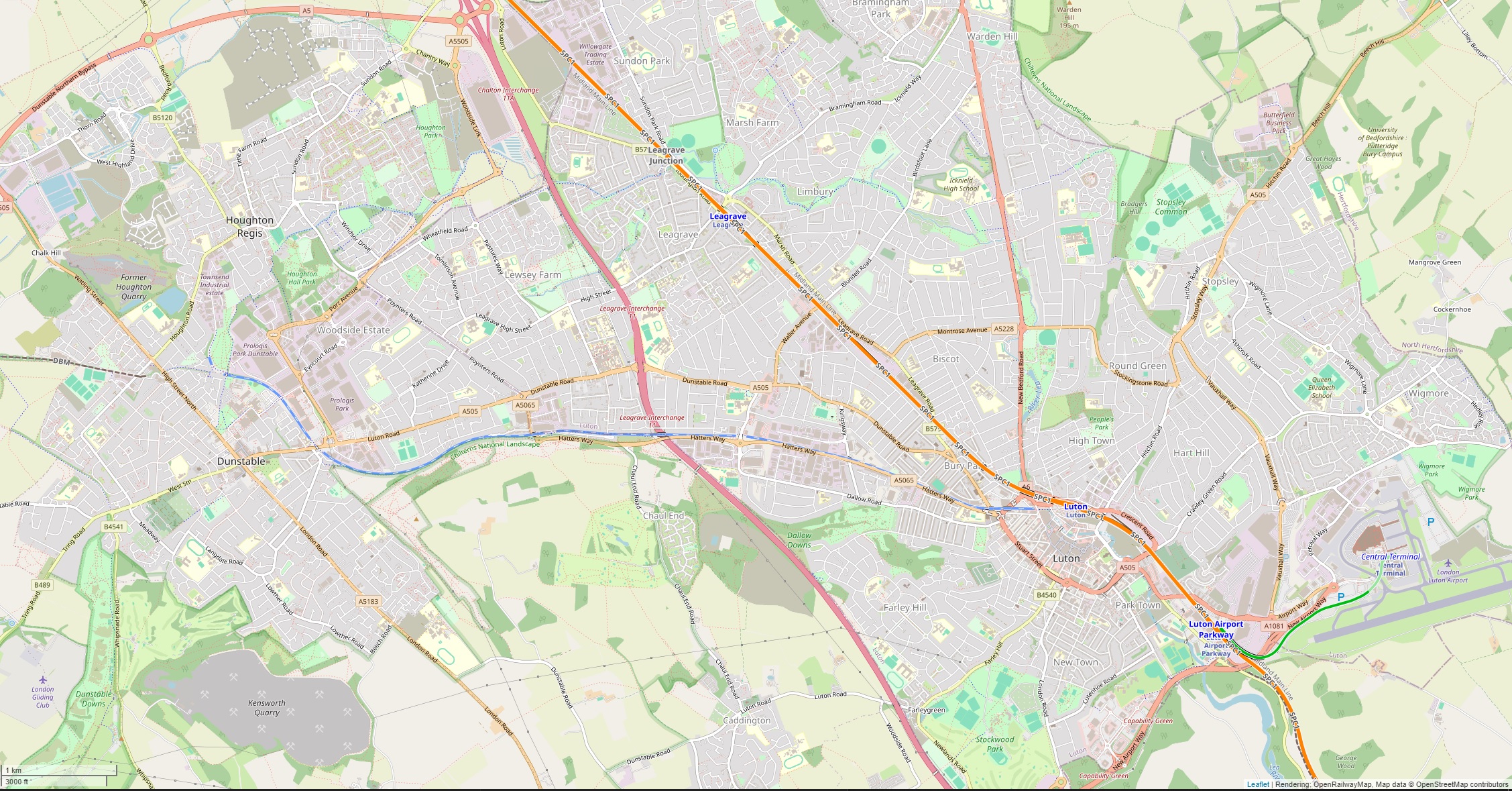
A direct rail link between Luton Airport Parkway Station via Luton serving Dunstable before running south of Leighton Buzzard / Linslade and directly into Milton Keynes Central.
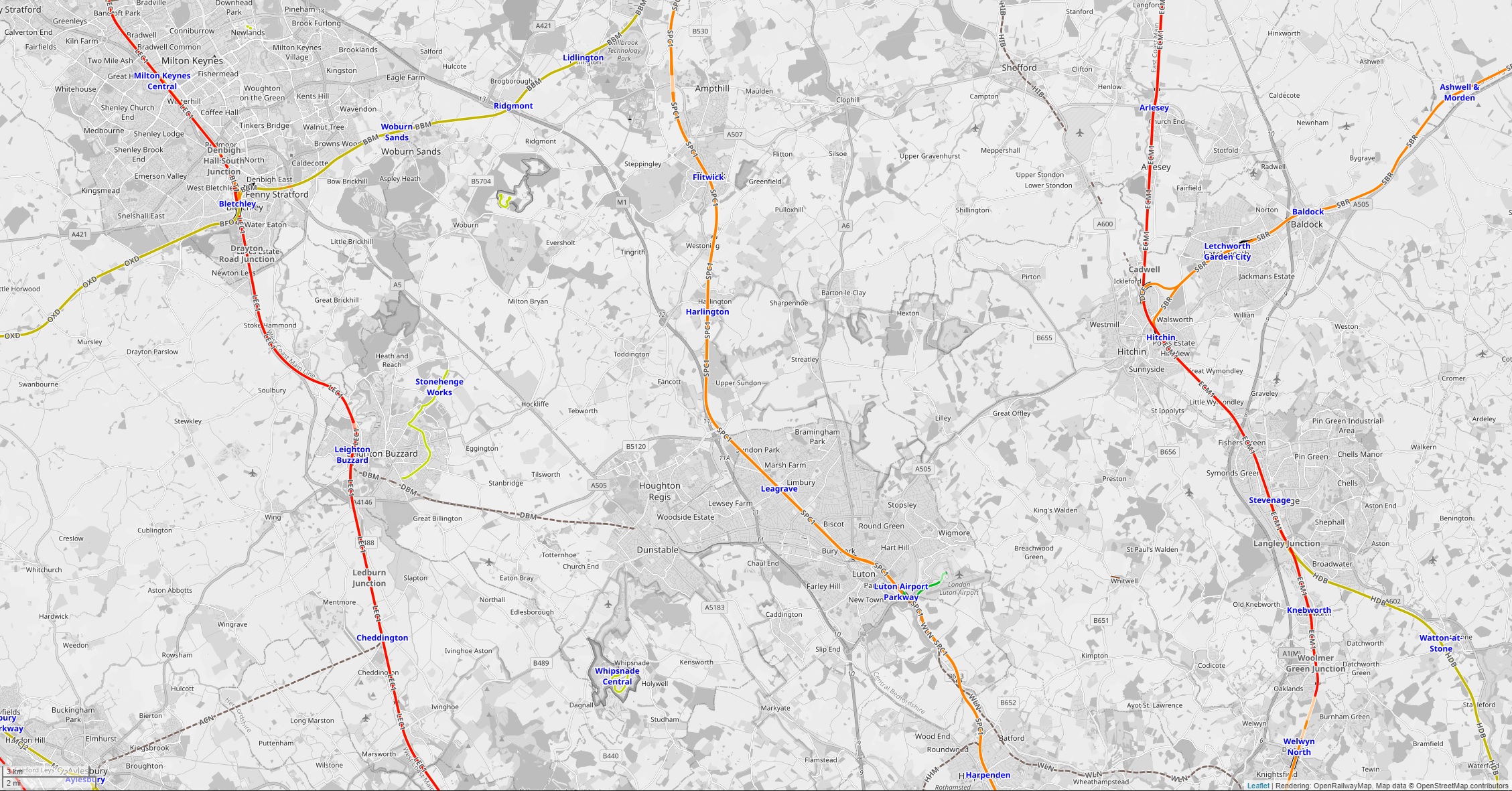
An extension westwards to Stevenage would unlock even bigger potential.
There has been much against this idea and that remains the case: blockages, guided busways and small ‘p’ political mental blocks as well. But what would it take to bring the various parts together and agree on a common policy?
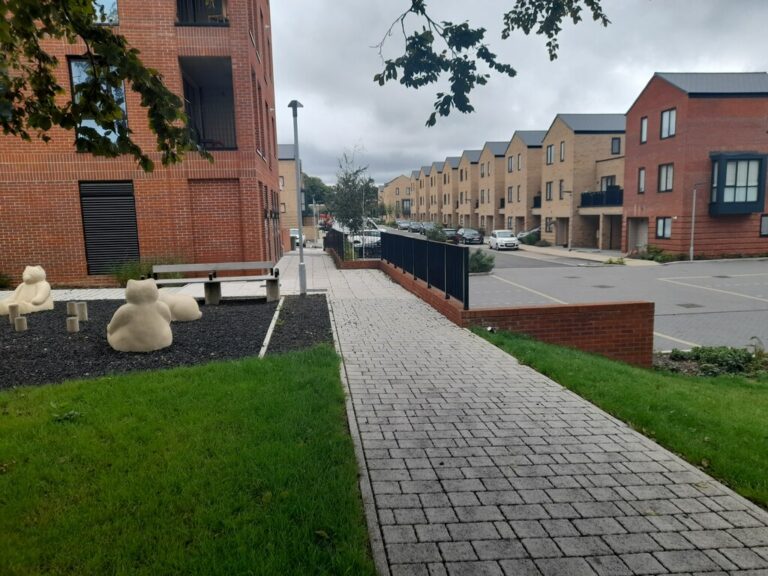
Dunstable
With a population of 40,699 Dunstable is one of the largest towns in England without a rail link. One did exist – a guided busway sits on part of it now.
A journey to London involves either a bus or drive to Luton or Leagrave, parking / changing and then rail. It takes time, it is a very congested corridor. Despite frequent buses, the route is often considered too slow for commuter needs.
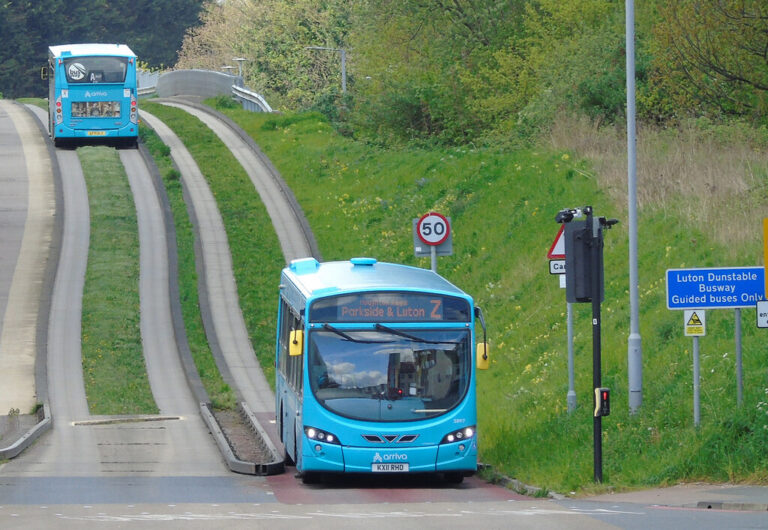
Guided Busway – The Status Quo
After a 30-year campaign to reopen the Luton – Dunstable rail link, the inquiry inspector ruled a guided busway would be built instead. There was palpable public dismay. The will of the majority was sacrificed on cost, local vested interest pressures and a stand-off between Luton and Dunstable. Indeed, Luton has everything to gain from such a rail link and nothing to fear.
The main benefit of the busway is to enable buses to leap-frog chronic road congestion end-to-end serving Dunstable and Houghton Regis with quicker public transport. Multiple operators ply the route and passenger loads vary. A typical bus at peak capacity holds 70-80 people, a typical 8-coach train can carry approximately 750 seated. Rail deals with volume and offers speed, comfort, and the ability to work during the journey. Trains are generally more effective at luring people out of cars in the UK for longer distances. Buses are essential for city-centre commuting, particularly within London. A subset of the population use buses for local journeys in the regions, driven by necessity. Car users tend to be more likely to use rail when conveniently provided – a choice. It could be said that bus users have gained from the busway in the absence of anything else. In the case of Dunstable, no rail option has resulted in limited modal shift from car.
The key questions remain: Is the current provision adequate? Is it sustainable and does it inspire real, lasting modal shift? Renewal of busway concrete would be a costly mistake if it is found wanting. A rail link would be regularly maintained and pay for itself. This is not visiting the past, it is a portrait of a brighter future where sustainable public transport infrastructure exhibits growing confidence in the South Bedfordshire areas as major players in national life.
Re-distributing Bus Capacity
If the railway were rebuilt, displaced buses could strengthen road-based operations and diversify services reaching out more to new inter-urban feeder markets.
A Positive Modal Shift
Our view is that local and regional government policy of “use what remains as staple public transport” is lazy and inadequate.
By rail, Milton Keynes to Luton via Bedford and Bletchley takes 3 hours, costs approximately £25 and is unreliable. By MK1 or other bus-coach transport, it takes between 1-2 hours and is £3. The roads are constantly congested.
BRTA states that only rail lures people out of cars.
A direct rail link between Milton Keynes and Luton would serve new demand, vastly reducing road journeys and bring multiple benefits to all, including better air quality, land saved, environmental benefits and lower ill-health.
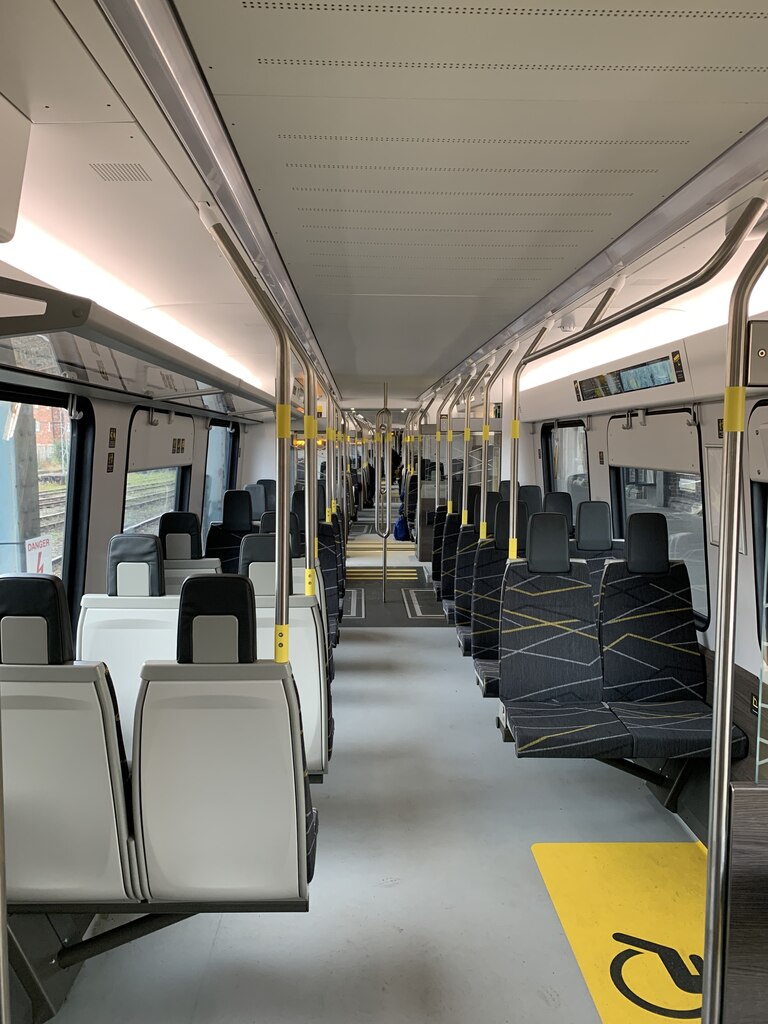
A Phased Approach
We propose a 20 year plan to create an incrementally re-constructed modern design railway between Luton Airport Parkway and Luton via Dunstable to the West Coast Main Line (WCML) south of Leighton Buzzard and north of Cheddington.
We envisage costs of between £500m to £2bn, including duration and inflation in what could be a decade from agreement to delivery. The risks are that targeted and unchallenged development will block the most efficient routing. Left unprotected, there could be tough choices of reclamation or diversion or even project abandonment.
BRTA sees the phases as follows:
Ø Phase 1: Luton Airport – Luton – Dunstable as a terminal branch off the Midland Main Line (MML). This would give medium to longer distance direct, fast rail-based access to Luton Airport from St Albans and London. Luton and Dunstable economies would benefit from reduction in road traffic in the interim, with environmental, quality of life and health improvements.
Ø Phase 2: Dunstable – Stanbridge area, creating a physical track linkage with the WCML (south of Leighton Buzzard and north of Cheddington). Giving Milton Keynes – Dunstable – Luton – Luton Airport direct rail would result in reductions of traffic on A5, A5505, M1 and A505 respectively and incentives for relocation to the area with employment and quality of experience.
Ø Phase 3: Luton Airport to Stevenage. A wrap around new-build for a complete Cambridge / Norwich – Luton Airport – Luton – Dunstable – Milton Keynes arc. This would complement the Oxbridge arc at around 20 miles separation. Given the current pace-of-growth, more rail capacity closer to London will be needed and we see no better time than now for the two schemes to be planned together.
Luton
1. What’s in it for Luton?
Luton stands to gain improved public transport, transit times, more capacity and wider regional links by sustainable transport.
2. What does the area need?
The voices of Luton and Dunstable residents must be heard. Focus groups and surveys would guage opinion on the busway and wider regional rail link potential, prompting reflection on environmental and regenerative gains.
3. Where is protection needed for potential rail corridors?
a. A duck-under from the south from slow lines to new twin-track lines along the busway to Dunstable.
b. Relocation of the interchange between MML and a proposed Dunstable link is absolutely required. However, demands for new, expanded and better station provision, the location of the current station seems locked-in. Can the stalemate in conceptualism, design and delivery stages be overcome?
d. A Dunstable link station would have 8-coach length halts, extended footbridge and lifts from main station with a new ticket hall and services on the land between the student accommodation and walkway to Guildford Street and the Arndale Centre. Luton shops would be served from Dunstable, luring audiences with quicker rail-based transport with a toilet on board.
e. Passing over the Bedford Road, going westwards on the re-railed Busway to Dunstable, a halt-style station with lifts and a modest booking hall would serve the college. North of the college a new bridge over the road-way which will need lowering for access to Amazon and Sainsbury’s areas for example and vice versa to the railway (wider employment opportunities and inwards commuting to the town centre.
Creating a New East-West Arc
Our proposed phase 3 is a new-build extension connecting Stevenage, extending the line from Luton Airport. Our suggestion is a route to the south near Knebworth for Stevenage (with interchange to Hertford); Hitchin (for stations to Peterborough) and Cambridge (for wider East Anglia).
Sustainable links for large audiences to Luton Airport, Luton, then Dunstable and onwards for Milton Keynes Central are clearly needed.
The anticipated volume of use would more than pay for any local losses, resulting in clearer roads in a context of growth and regeneration. Market demand across this wide and strategically growing arc would be immense.
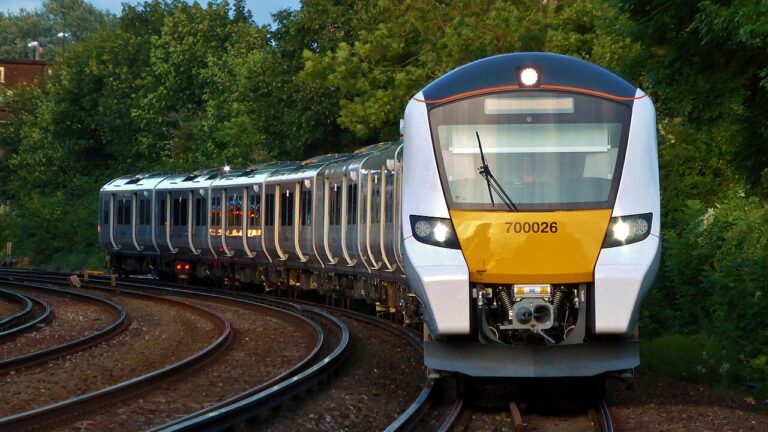
Thameslink Improvements Needed
Luton Airport Parkway is a major interchange station in its own right. It needs investment to create a new 4-8 coach bay platform underneath the DART transit facility. That would enable some Thameslink services to terminate there.
Looking ahead, capacity for more trains is needed to take advantage of the Dudding Hill North – West Rail reopening for passenger services for Heathrow, Reading and Guildford. These could serve Dunstable (phase 1) and/or terminate at the new bay platform if Luton cannot accommodate them on the through lines.
Likewise, buses going to the interchange station and terminating should also be considered as part of the reconfiguration of Central Luton itself in light of a reinstatement of a Dunstable Rail Link.
How do we get there?
1. Luton needs to be consensual and convince itself of the gains outweighing the pains.
2. Dunstable has to want re-railing and be willing to make space to accommodate it, integrate parking and active transport.
3. Milton Keynes, Leighton Buzzard, Linslade, Stevenage and Luton Airport all need to be convinced of the business case and buy-in as would-be contributors, market feeders and crucial investors.
4. A full-blown feasibility, engineering, business case and environmental impact study is required using a phased approach.
5. Central government support needs to be convinced it is worth it. The current Oxbridge East-West Rail via Bedford will be boosted, not undermined by such an additional railway. E-W Rail will already be handling huge growth in development, land-use and the market share of 8 million extra visitors per year to Universal Park (at Wixams) with a share of 26,000 extra jobs.
As a nation, we must avoid the disenfranchisement of communities caused by isolation and reliance on costly car ownership and the ability to drive. Better public transport enables all to have better access and chances for leisure, work, study and a more fulfilling life.
Crucial Cross-Nation Links
We estimate the population of principal places between Luton – Leighton – Linslade – Milton Keynes areas to be around 600,000 – a huge number not to be served by either E-W axis or NW-SE axis rail.
BRTA believes there is sufficient potential, scope and demand for the commissioning of a collaborative study, illuminating the benefits and challenges in each area.
Essential rail infrastructure regenerates and makes existing and new businesses prosper. Reliable, quick, comfortable and accessible options make people choose rail – sustainable Britain needs re-railing.
HOW TO ADD YOUR VOICE
Write in support of these ideas to your local councillors and MP:
members.parliament.uk/members/commons
or www.writetothem.com
It’s powerful to write to your MP or councillor in your own words, telling your representative about your own beliefs and experiences and how they relate to this area. See below.
Join BRTA as a member to support this and other reopening campaigns.
Volunteer with BRTA if you share our vision and want to help bring it about.
Could you help push this campaign forward?
Donate to BRTA to help us advocate for rail links fit for the 21st century!

Think about the following questions when composing your letter to MPs / councillors:
- What journeys do you make? Work? Leisure? Appointments / visits?
How could this link improve the journeys you make? - Do you actively choose road over rail or bus? Why?
- Do you consider where you live to be well served by public transport?
- Do you have experience of new areas of housing and public transport?
- What are your experiences of the road journeys you make in the region?
- Have you made employment, school or relocation decisions based on journey times or access to public transport? Or on the lack of access to public transport?
- What are your thoughts on the environmental impact of your journeys?
- Do you have accessibility needs that affect journey decisions you make?
- What do you think about air pollution in your area?
- What are the most important transport related issues to you? Why? Journey times? Road congestion reduction? Pollution reduction? Accessibility? Taking freight off the roads in your area? A better connected region?
- What should be done next to make this happen?
Our tips: - Even if your MP is not in this region, your letter provides them with an opportunity to learn about the issue and take action themselves.
- Aim for your letter to be no longer than one and a half sides of A4.
- Engage. Get your representative’s attention with a dramatic fact or short statement.
- State the problem. Present the causes of the problem you just introduced. How widespread or serious is the problem?
- Inform them about the solutions that reopening would bring.
- Call to Action. Let them know what you want them to do about it.
- Ask for a response.