
BRTA on Great British Railways
Great British Railways – the new publicly controlled rail operator – will oversee services through nearly every part of the country.
Richard Pill, representing BRTA, comments on GBR in July 2026.

SUSTAINABLE BRITAIN NEEDS RE-RAILING
Regenerating local economic growth
Reconnecting communities, enhancing accessibility and inclusion
Reducing road congestion and pollution, improving our environment
promoting quality of life and health
July 2026. A week is a long time in politics – recent events have brought that to the fore. Out goes Sir Keir Starmer MP as Prime Minister – a “new-guard” is incoming – new ministers, new custodians of transport in Britain.
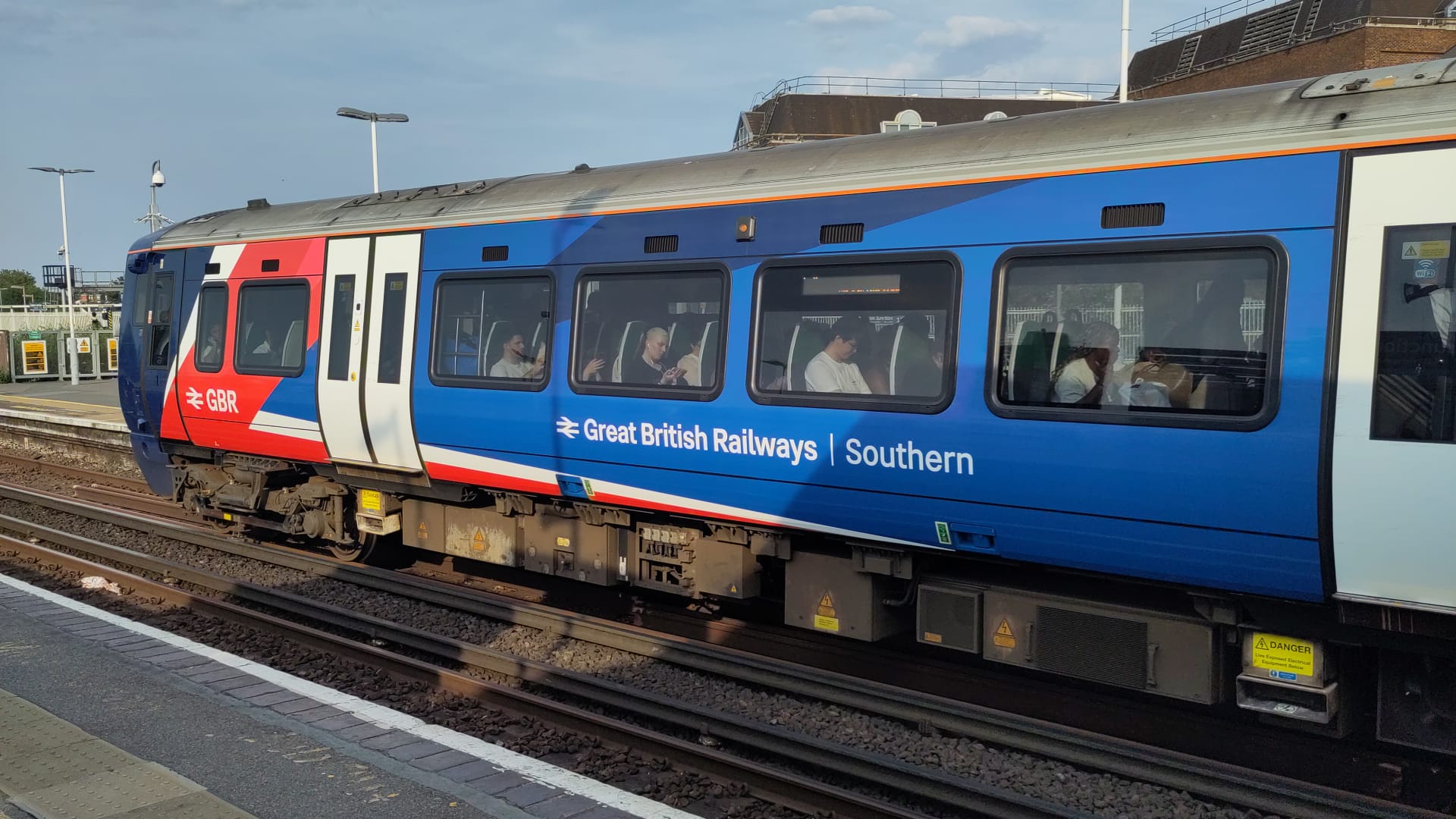
Meanwhile, as already committed and much mooted, we have the roll-out of the renationalisation of Great British Railways (GBR). Badges changed, rolling stock livery colours updated and many a photo-shoot for budding MPs seeking to shore up their place and position and candidacy in the wake of the May 2026 local election results.
BRTA wishes to avoid polemic ideological arguments of private versus public. Both have pros and cons and neither, in practice, have been panaceas.
On the one hand, local individuals and communities funded the railways into being. On the other it was the 1844 Gladstone Railways Bill which brought regulation, signalling and controls to ensure safe operations. That safety-first concern has helped the railways build a global reputation of being a trustworthy mode of transport for both people and goods.
More recently, under state ownership by both Labour and Conservative governments, the closure of many miles of railway was on a massive scale. We can find many reasons for these closures: the rise of oil, private car ownership, governments prioritising roads as staple transport infrastructure, a dearth of investment post-war, the lack of modernisation, cost lowering and enhancement. Road-based trends have been locked in and the side-effects of land loss, pollution, congestion and road blight harm us all whilst stifling economic growth and sustaining inequality.
1994-1997 Privatisation of British Rail relied heavily on BR’s legacy of tracks, trains and infrastructure. It did not lead to a programme of reopenings or a reversal of rail’s absence from old and new markets. However, passenger and freight demand grew. And that growth continues.
Privatisation did not leverage properly distributed new investment – certainly nowhere near the scale of the 19th century pioneers. HS2 has led the ridicule of outlandish costs and bizarre solutions designed for fractional speed enhancement to the exclusion of proper consideration of system integration, station locations, and freight mixed use. High speed specifications have been imported from places which enjoy a lot more land space than Britain.
So, we ask these questions of GBR:
Will renationalisation coincide with a new commitment for specific funding for a nationwide programme of local rail re-openings?
The cancelled £500 million Restore Our Railways Fund which, although pitifully small for the whole nation, did establish the principle that reopening local lines was a government priority. Momentum was building… and then snuffed out. Will the initiative be returned to?
Will renationalisation simplify the processes for rail reopenings, new-build rail and capacity enhancements on existing rails?
Demands for costly over-detailed business cases, a labyrinth of studies, risk thresholds and other bureaucracy has got in the way of many vital re-opening schemes. Without a firm government commitment addressing the need for quality rail provision, engagement by people at all levels will be deterred and people-power squandered.
We demand a proper conversation on the big picture of transport in Britain. Will GBR lead it?
Putting people, places and the environment at the heart of all policy is paramount – we must see rail carrying us into the future. Less road. Fewer vehicles.
£billions are found for a Lower Thames Crossing road scheme. There’s no equivalent for rail. A new third road bridge across the River Severn Estuary? Why not a new twin-track rail bridge between England and Wales instead? Modal shift must be invested in. Built in.
What is the grand plan and how are we to get there? Beyond the GBR razzamatazz, the bright new paint, where do we wish our railways and indeed the transport of the country to be in 5-10 years? Let alone 2050.
Dunstable, Great Dunmow, Hawes, Ripon, Keswick, Bideford, Tavistock, Witney, Cranleigh, Ross-on-Wye and Cirencester are cut off and disenfranchised from the rail network. Many others too.
Northampton, Leicester, Bedford and Ely have rail bottlenecks which need new tracks, junction and station designs to reach unlock potential. East Anglia needs more access from the radial network. East-West Rail – will it be fit for purpose and when will we be on board? Where else can electrification bring services fit for the 21st century?
Behind the GBR shield badge, what input will be afforded to rail user groups, professional networks and voluntary organisations like BRTA?
BRTA aims to make sure that grass-roots dialogue happens and that community interests can be heard and spoken to power.
In BR days we had the Area Manager, people felt listened to. Will GBR be full of the ‘great unknowns’ who only appear at high-flying paid events? Will voluntary voices be shut out of the discourse altogether?
What of more freight by rail? Where are the plans for rail-stimulated decarbonised economic growth?
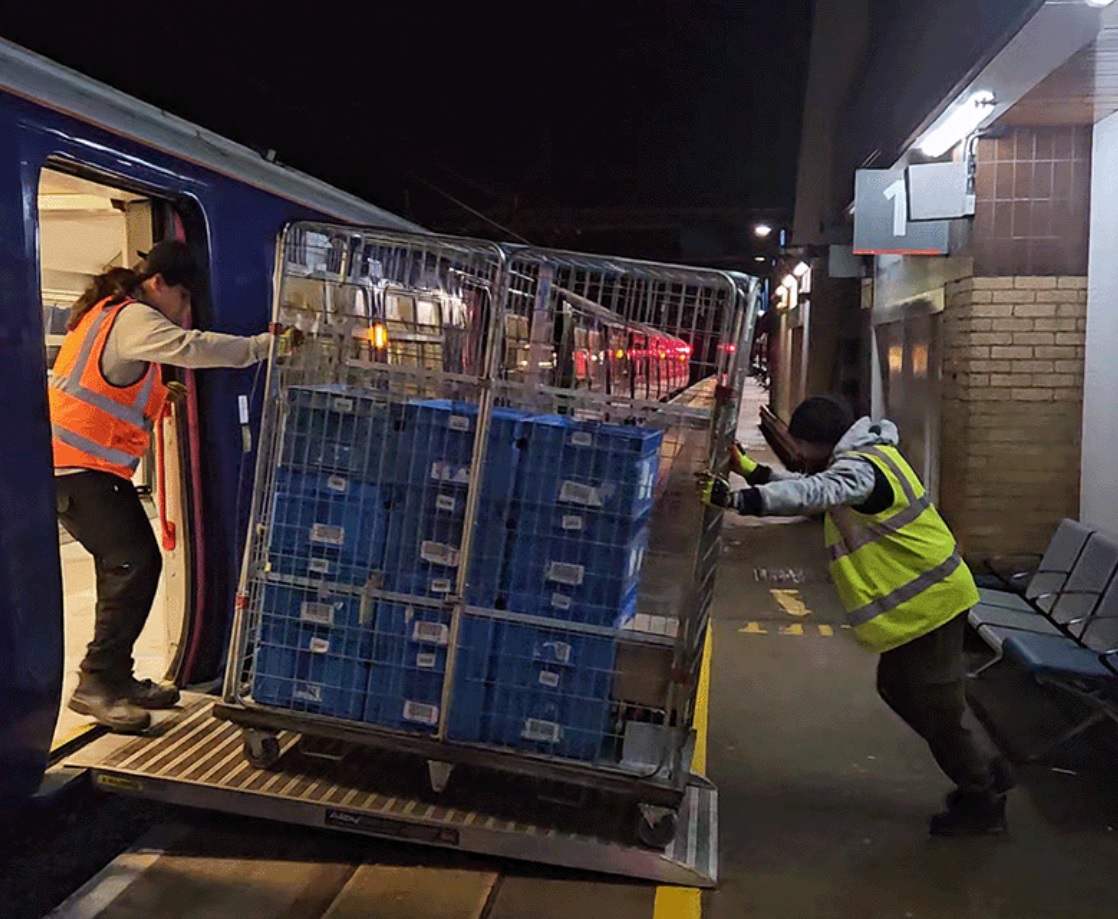
Where are the incentives for Amazon and others to carry more by rail from ports to distribution centres and around the country? Can freight by rail go beyond containers and aggregates? Can the inspiring work of Varamis Rail inspire a new model for nationwide low emission, high speed rail logistics?
BRTA is also mindful that some “digital” solutions create barriers for some and impact on access equality. Not all of us are mobile pre-book or QR code users. There must be discounting, provision and accommodation for turn up and go users. It’s people that makes transport truly accessible – ticket offices and expert station personnel are vital components of a system for all. Trains need active front-line staff and drivers should be allowed to get on with driving! Is GBR committed to delivering a railway that serves all, not some?
We think the immense opportunity of GBR needs to hit the ground running, listening and communicating its vision for rails to take the country forward. Sustainable Britain needs re-railing.
What do you think? Join BRTA today.
HOW TO ADD YOUR VOICE
Write in support of reopening to your local councillors and MP:
members.parliament.uk/members/commons
or www.writetothem.com
It’s powerful to write to your MP or councillor in your own words, telling your representative about your own beliefs and experiences and how they relate to this area. See below.
Join BRTA as a member to support these and other reopening campaigns
Volunteer with BRTA if you share our vision and want to help bring it about.
Could you help push this campaign forward?
Donate to BRTA to help us advocate for a rail link fit for the 21st century!

Think about the following questions when composing your letter to MPs / councillors:
- What journeys do you make? Work? Leisure? Appointments / visits?
How could this link improve the journeys you make? - Do you actively choose road over rail or bus? Why?
- Do you consider where you live to be well served by public transport?
- Do you have experience of new areas of housing and public transport?
- What are your experiences of the road journeys you make in the region?
- Have you made employment, school or relocation decisions based on journey times or access to public transport? Or on the lack of access to public transport?
- What are your thoughts on the environmental impact of your journeys?
- Do you have accessibility needs that affect journey decisions you make?
- What do you think about air pollution in your area?
- What are the most important transport related issues to you? Why? Journey times? Road congestion reduction? Pollution reduction? Accessibility? Taking freight off the roads in your area? A better connected region?
- What should be done next to make this happen?
Our tips: - Even if your MP is not in this region, your letter provides them with an opportunity to learn about the issue and take action themselves.
- Aim for your letter to be no longer than one and a half sides of A4.
- Engage. Get your representative’s attention with a dramatic fact or short statement.
- State the problem. Present the causes of the problem you just introduced. How widespread or serious is the problem?
- Inform them about the solutions that reopening would bring.
- Call to Action. Let them know what you want them to do about it.
- Ask for a response.